

Michele Bullock’s message was uncomfortable, but its underlying logic deserves to be taken seriously. Inflation remains too high, Australia’s productive capacity is growing too slowly, and another international energy shock is making the task harder. Waiting carries risks as well as raising rates.
That makes the Reserve Bank’s latest decision defensible. It does not establish that the timing, size and distribution of the adjustment are the best available. A household cutting groceries to meet a mortgage repayment is entitled to ask how its sacrifice addresses an oil disruption, a data-centre construction boom or a shortage of homes.
Australia needs both parts of that conversation. We need a central bank capable of containing inflation, and governments capable of reducing the pressures that leave interest rates doing so much of the work. Treating either institution as the sole villain lets the other questions go unanswered.
effective 30 September
25 basis points
underlying inflation
seasonally adjusted
Different measures and reference periods: the two 4.6 figures are unrelated. Sources: RBA decision and cash-rate history; ABS August CPI and August Labour Force. [2] [3] [33] [5]
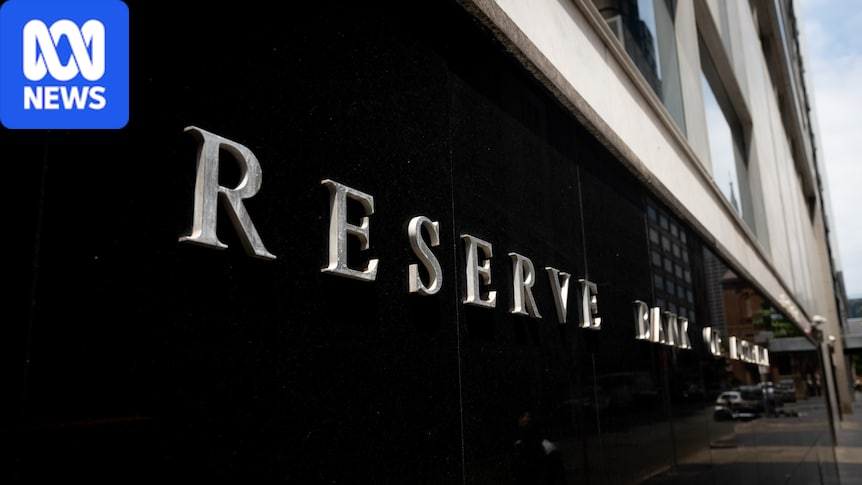 ▶ Watch the ABC recording
Why the RBA raised rates in a slowing economy
On 29 September, the Monetary Policy Board unanimously lifted the cash-rate target by 25 basis points to 4.60 per cent. It was the fourth rise this year, bringing the cumulative increase to one percentage point. Further increases remain conditional; Bullock did not announce a predetermined path. [2] [3]
Four rises. One percentage point.
Cash-rate target, 2026 · dates each increase took effect.
- 4 Feb3.85%+0.25 percentage points
- 18 Mar4.10%+0.25 percentage points
- 6 May4.35%+0.25 percentage points
- 30 Sep4.60%+0.25 percentage points
The most useful distinction in her explanation is between an economy’s growth rate and its capacity. Demand does not have to be booming to exceed what businesses can sustainably supply. If capacity grows weakly, even modest additional spending can run into shortages, rising costs and higher prices.
The national accounts illustrate the uncomfortable combination: GDP rose 0.4 per cent in the June quarter, but GDP per person was flat. The Productivity Commission reports that output per hour was also flat that quarter and 0.2 per cent lower than a year earlier. Weak living-standard growth and inflation pressure can therefore coexist. [6] [7]
Bullock identifies three overlapping pressures: domestic capacity constraints, prolonged energy disruption in the Middle East, and AI-related investment and input costs. She explicitly says the domestic problem preceded the conflict. That is a useful corrective to any explanation that attributes the whole problem to events overseas. [1]
There is still substantial uncertainty in that diagnosis. The amount of spare capacity cannot be observed as easily as a cash-rate announcement. It is estimated from imperfect indicators. The Bank should explain what has changed in those estimates and how strongly the evidence supports another increase, rather than expecting the public to accept the diagnosis simply because it is the central bank’s.
How higher interest rates affect the wider economy
Higher rates cannot reopen an oil route or manufacture another transformer. They can discourage some borrowing and spending, alter investment decisions, affect asset prices, and support the dollar relative to what it would otherwise have been. A stronger currency can reduce import costs, although that outcome depends on overseas rates and other forces too. [9]
How a higher rate can reach prices
Parallel channels, with uncertain strength and timing.
Spending and investment
- Borrowing costs and saving incentives change
- Some spending and investment slow
- Less pressure on available supply
Borrowers and savers experience different cash-flow effects.
Currency and imports
- Relative returns may support the dollar
- Some import prices may be lower
Overseas rates and other forces also influence the dollar.
A rate rise cannot directly repair oil routes or build homes. It can limit the wider spread of inflation.
Explore all four transmission channels
Borrowing and cash flow
Borrowers may have less to spend after servicing debt. Savers may receive more interest. Those effects fall on different people and partly offset in aggregate.
Saving and investment
Saving becomes more attractive; some purchases and projects become harder to finance. That reduces demand, but can also delay investment that would expand supply.
Asset prices and credit
Lower property or other asset values can weaken spending and the collateral available for borrowing. The size and timing of the effect vary.
Exchange rate and imports
Higher relative returns may support the Australian dollar and lower import costs. A rate rise does not guarantee that the dollar rises on announcement day.
These are simplified mechanisms, not predictions for each household. RBA research finds important exchange-rate effects and policy impacts that generally peak after about one to two years; its models differ in their estimates. [8] [9]
The RBA’s strongest argument is about preventing an initial shock from spreading. Businesses facing persistent fuel and transport costs may increasingly pass them on. If higher inflation becomes normal in price-setting, restoring stability later could require a harsher slowdown. The Bank’s own research recognises that responding to supply shocks involves a genuine trade-off with economic activity. [10]
The strongest objection concerns the additional dose. February, March and May’s increases are still working through the economy. Adding another rise before their full effect is visible risks overdoing it. Equally, waiting for every lagged effect to arrive could allow inflation to become more persistent. This is a judgement under uncertainty, and the case for this particular increase deserves scrutiny on that basis.
Who carries the cost
The immediate pressure is clearest for variable-rate borrowers and businesses with floating-rate debt. But the wider effects reach renters, jobseekers, savers, exporters and people whose income depends on customers continuing to spend. The costs are uneven, and the benefits of lower inflation arrive on a different timetable.
Mortgage borrowers
Repayments may riseLoan type, balance, remaining term, offsets, buffers and lender pass-through change the effect.
Savers
Deposit income may risePass-through, tax and inflation affect the real gain.
Renters
Housing and job pressuresA landlord’s interest bill does not automatically become the same rent increase.
Small businesses
Finance costs and customer demandCosts can rise while customers spend less; some firms have little scope to pass costs on.
Workers and jobseekers
Hours and hiring may weakenExperiences differ by industry and household; aggregate job growth can hide who misses out.
Potential channels, not measured effects of the September rise. People can belong to several groups. Card size does not represent population shares or the size of any gain or loss.
What does 0.25 percentage points look like?
For an illustrative $600,000 principal-and-interest mortgage with 25 years remaining, moving from 6.00 to 6.25 per cent increases the monthly repayment from approximately $3,866 to $3,958: about $92 more a month.
These are assumed retail loan rates, not the RBA cash rate or a market quote. Full pass-through; monthly repayments; no fees, offset balance or extra repayments.
Illustrative increase: $92 per month ($1,106 annualised).
Calculation and limits
Monthly payment = P × r ÷ [1 − (1 + r)−n], where P is the loan balance, r is the annual rate divided by 1,200, and n is the remaining number of monthly payments. At a zero rate, payment = P ÷ n. The annualised difference is twelve times the monthly difference, not an estimate of additional lifetime interest. Real lenders use their own payment schedules and rounding. This is an educational scenario, not a forecast or personalised loan advice. Inputs stay in this file and are not submitted anywhere.
National averages cannot settle the fairness question. Large offset balances elsewhere in the system do not pay the mortgage of a family with no buffer. Likewise, a smaller net cash-flow effect in an economic model can conceal substantial losses for borrowers and gains for savers. The RBA’s modelling paper explicitly acknowledges limits in how it captures the distribution between households. [8]
Housing is the most difficult feedback loop. Bullock acknowledges that falling sale prices and expensive materials can make new developments less viable. Higher financing costs can compound that problem. Restraining demand may help contain inflation now while making it harder to expand the housing supply needed later. That does not prove the rate decision is wrong. It makes a credible construction and infrastructure response more urgent. [1] [9]
More unemployment is not a harmless statistical adjustment
Bullock is right that unemployment can rise while employment also grows. In August, the ABS recorded 39,500 more employed people and 28,200 more unemployed people as labour-force participation increased. But full-time employment fell while part-time employment rose. Monthly estimates have sampling variability; the ABS recommends looking at trends. The headline alone does not capture security, hours or the difficulty of finding suitable work. [5]
Slower hiring can still impose a serious cost on school leavers, people returning to work and those already struggling to find a job. Conversely, it is too simple to say an unemployment rate above a particular number automatically proves the RBA has failed its full-employment objective. The sustainable level is uncertain and depends on the economy’s structure. That uncertainty is a reason for caution and transparency. [11]
Productivity and AI deserve more precise questions
One of the most consequential answers comes late in the conference: Bullock rejects the idea that Australia is experiencing a wage–price spiral. She distinguishes wage growth from unit labour costs, which also depend on how much output is produced per hour. Iain Ross, a member of the Monetary Policy Board, had made the same broad distinction in a speech a week earlier. [1] [12]
Productivity is not a measure of how hard an individual tries. Better tools, skills, management, infrastructure and work organisation can raise output per hour. Poorly designed systems can waste the effort of conscientious staff. Asking workers simply to work harder avoids the institutional and investment questions.
The AI boom sharpens those questions. Building data centres can compete for construction workers, materials and power before any economy-wide productivity gains arrive. Imported equipment limits how much of the investment becomes immediate Australian demand, a qualification Bullock herself makes. Future efficiency gains remain a possibility whose timing and distribution matter. [1] [26]
A serious policy response would ask which projects add usable energy and skills, which constrain other construction, and whether ordinary businesses can turn AI investment into better output. It would measure results rather than treating investment expenditure as proof that the productivity problem is already being solved.
The political conversation
The following assessments distinguish responses to this decision from earlier policy positions. Each argument is tested for what it explains and what it still needs to demonstrate. They are assessments of particular claims, not scores of a party’s honesty or its voters.
Select a person to open the argument and assessment. Logos identify the source or affiliation; they do not imply endorsement.
 Jim ChalmersLabor · TreasurerDirect responseReal external shocks and an incomplete domestic explanation

Direct response · Jim Chalmers · 29 September 2026
The Treasurer acknowledged household pressure, highlighted the Middle East conflict and global AI demand, and defended the government’s cost-of-living, budget and productivity approach. [13]
What holds up: imported energy disruption is a real shock. Australian governments cannot control world oil prices, and some public expenditure can build capacity as well as support demand.
What needs more: an overseas explanation is incomplete when the RBA identifies domestic constraints that predate the conflict. A better budget result than forecast does not, by itself, reveal how much current fiscal policy adds to demand. The spending mix, tax settings, state budgets and timing all matter. Labor should explain that combination rather than treating global disruption as the end of the discussion.
 Tim WilsonLiberal Party · Shadow TreasurerDirect responseA valid spending question and an overconfident causal claim

Direct response · Tim Wilson · 29 September 2026
The Shadow Treasurer blamed government spending, emphasised that the first increase of 2026 preceded the Iran war, and called for reducing waste alongside an annual personal-tax-cut guarantee. [14]
What holds up: public demand belongs in the inflation discussion. The chronology also challenges a war-only explanation.
What needs more: neither point measures how much Commonwealth spending caused this increase. Bullock declined to single out a culprit. Spending reductions should be assessed by what is removed, when demand changes, and what happens to services and productive capacity. Tax cuts also leave more spending power with households unless offset. The appropriate test is the whole fiscal package, not one side of the ledger.
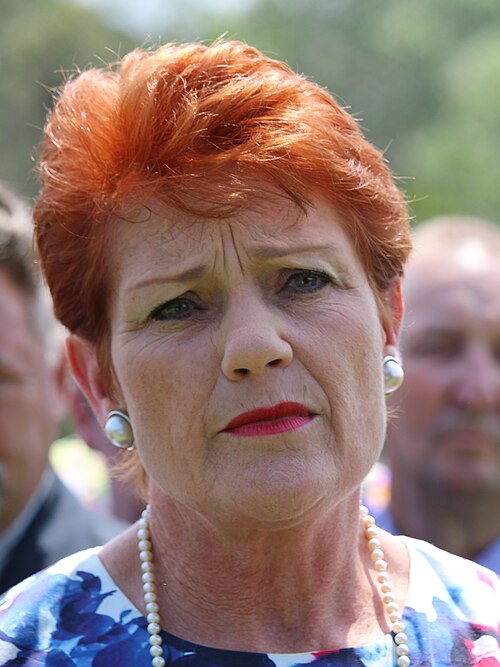 Pauline HansonOne NationDirect reactionImmediate breathing room with a retirement and demand trade-off

Direct reaction · Pauline Hanson · 29 September 2026; policy published 7 September
Hanson called for Chalmers to implement One Nation’s Super Pay Boost and resign. Her resignation demand expresses political accountability; it is not evidence that the Treasurer alone caused the decision. [16]
▶ Hanson’s response · video listingThe proposal would let eligible renters and owner-occupier borrowers redirect one quarter of future compulsory super contributions into take-home pay for up to 36 months. At the 12 per cent contribution rate, that means 3 per cent of wages before concessional tax, with at least 9 per cent of wages continuing into super. Existing balances remain untouched. This is a proposal, not an available entitlement. [17]
What holds up: avoiding arrears or losing a home can be more urgent than increasing retirement saving. A voluntary option recognises that households face different pressures.
What needs more: bringing future savings forward does not create additional goods or services. It reduces subsequent retirement accumulation and may add current demand. The inflation effect depends on participation and whether the money is spent, saved or used to reduce debt. That needs modelling. It would be unfair to portray the policy as raiding existing balances, and equally misleading to present it as cost-free inflation relief.
 Nick McKimAustralian GreensEarlier policy contextDistribution and market power require evidence about particular markets

Earlier policy context · Nick McKim · 19 May 2026; no direct 29 September response verified
McKim’s May statement cited RBA research about changes in corporate price-setting, argued that corporate pricing contributed to inflation, and advocated broader anti-price-gouging and competition powers. This provides a relevant alternative emphasis; it is not a verified response to the September decision. [18]
What holds up: competition and pricing power deserve scrutiny. Households should not bear avoidable costs created by weak competition, and monetary policy is poorly targeted at an individual market failure.
What needs more: evidence of changed price-setting warrants examination, but the next question is whether those changes reflect market power, demand or input costs. RBA research distinguishes those mechanisms and cautions against reading a simple causal story from profit totals. A persuasive reform case should identify the conduct and show how the proposed remedy would reduce avoidable price pressure. [19]
 David PocockIndependent senatorEarlier policy contextBuild capacity before assuming the benefits of AI

Earlier policy context · David Pocock · 9 June 2026
Pocock’s data-centre intervention warned about electricity-system pressure and the need for additional generation and storage. It is relevant to the sequencing problem Bullock describes, but is not a September rate-decision response. [26]
Assessment: requiring credible plans for energy and infrastructure can help expose costs that otherwise fall on other users. The challenge is to distinguish constraints that protect system reliability from delays that unnecessarily obstruct useful investment. Neither an automatic approval nor an automatic rejection answers that question.
Migration is another argument likely to enter this debate. Large population changes can worsen pressure in particular rental markets. Migrants also add workers and productive capacity. RBA analysis finds those effects cannot be reduced to a universal migration-equals-inflation equation. The useful question is whether housing, infrastructure, skills and settlement patterns are keeping pace. [27]
What the media and other voices add
Coverage is most useful when it exposes a different mechanism or tests a claim. Counting headlines by political label would tell us much less.


Challenges a government-spending-only explanation.
Reading it critically: Useful causal breadth. Assess this interpretation separately from ABC’s straight reporting.
Source and attribution ↗
Explains the decision and the Governor’s account of inflation pressure.
Reading it critically: Provides the event record underpinning this analysis.
Source and attribution ↗
Shows disagreement among bank and investment economists about the next move.
Reading it critically: Disagreement reveals uncertainty; it does not make every scenario equally likely.
Source and attribution ↗
Urged a pause as unemployment increased.
Reading it critically: Rates cannot end the war, but that alone does not show they cannot limit its wider inflation effects.
Source and attribution ↗
Warned about employment losses and argued for other cost measures.
Reading it critically: Includes people without mortgages. This was a prospective warning, not an observed effect of this rise.
Source and attribution ↗
Called for productivity, regulatory and spending reform.
Reading it critically: The detail and timing of specific reforms matter more than the general label “productivity”.
Source and attribution ↗The economist disagreement is consequential. AAP’s report identifies three different readings of what comes next.

Paul Bloxham
HSBCExpected another rise in November.

Shane Oliver
AMPExpected slowing housing and employment to prevent another near-term rise.

Ashwin Clarke
Commonwealth BankExpected a hold, while recognising the risk of November tightening.

Views reported on 29 September. These are forecasts, not announced RBA decisions. Source: Jacob Shteyman / AAP [22].
No suitable representative poll about public approval of this particular decision was verified for this article. Market pricing, an economist survey, social comments and consumer confidence measure different things. None can responsibly be relabelled as the percentage of Australians who support the hike.
How this article assesses perspective and evidence
The Labor response emphasises external shocks and policy management; the Liberal response emphasises fiscal restraint; One Nation’s proposal emphasises household choice and immediate liquidity; the Greens’ argument emphasises distribution and market power. These describe the contributions examined here, not every position held by those parties.
This article’s own perspective favours stable prices, institutional accountability, protection against concentrated hardship and investment that expands useful capacity. Its assessment would weaken if further evidence showed demand was already falling sufficiently, inflation expectations remained well contained, or the costs of additional tightening exceeded its likely benefits. Conversely, broader persistent price increases and less anchored expectations would strengthen the case for restraint.
Factual accuracy, causal explanation and political values are assessed separately. Strong rhetoric is not itself proof of dishonesty. A source’s popularity is not proof that it represents the population.
What households expected before the decision
A useful public survey asks a different question from political approval. In the Westpac–Melbourne Institute September survey, 64 per cent expected mortgage rates to rise over the next twelve months, compared with 59 per cent in August. Both surveys preceded the 29 September decision. [29] [30]

More people expected higher mortgage rates
Share of respondents expecting an increase over the next 12 months · 0–100% scale
Each full track represents 100%. The unfilled portion includes other responses; it does not represent opposition to a rate rise.
Expectation is not approval. These findings do not show whether people wanted a rise, supported the RBA or blamed the government. The five-percentage-point change is descriptive; statistical significance has not been established.
Who conducted the survey, and what can it tell us?

The published method describes random selection of Australian adults aged 18 and over by OZINFO and DYNATA, with population-distribution weighting. It does not disclose the verbatim rate question, interview mode, response rate or design effect. These results are context for household expectations, not a causal test of the September hike. [29] [30]
Two further arguments worth testing
These contributions sharpen the questions for the Bank and governments. The relevant test remains the quality of the mechanism, evidence and trade-offs each argument identifies.
Claims that need careful handling
Inflation is not the same thing as the price level
Before the decision, July’s annual headline CPI was 3.5 per cent and trimmed mean inflation was 3.6 per cent. The latter is an underlying measure, not simply “inflation excluding petrol”. Slower inflation usually means prices keep increasing more slowly. It does not reverse the accumulated rise in household costs. The August figures, released at 11:30 am AEST on 30 September, put annual headline inflation at 4.0 per cent and trimmed mean inflation at 3.6 per cent. They were not available when the Board decided. [33] [4]
A persistent oil shock does not establish permanently rising inflation
The supplied captions use categorical language about permanently higher fuel and transport prices. Persistence is a serious risk, but permanence is not established. A one-off increase in a price level is also different from prices continuing to rise at an elevated rate. That distinction matters when judging the policy response. [1] [10]
The 1990s comparison needs a correction
The RBA’s official conference transcript records Bullock’s comparison with double-digit inflation in the 1990s. ABS historical annual CPI data show 8.7 per cent in March 1990, falling to 1.5 per cent by December 1991; Australian annual headline inflation did not reach double digits during the decade. The audio of that passage has not been independently checked. This corrects the historical claim recorded in the official transcript. [1] It does not invalidate her broader argument that today differs from that era. [28]
Neither recession nor another hike was announced
Bullock says recession is not the central case, while acknowledging a scenario in which unanchored inflation expectations could require a much sharper slowdown. She also declines to guarantee the future rate path. Her warning about a return to near-zero rates is an outlook judgement, not a binding promise about every future crisis. [1]
Caption errors must not become financial claims
The supplied captions render the quarterly inflation passage as “around 6”. The official RBA transcript confirms 0.6 per cent, not 6 per cent. [1] Four successive quarters of 0.6 per cent compound to about 2.42 per cent annually. Names and technical terms are also mistranscribed. This article paraphrases the argument and uses official statistics for its numbers rather than treating the captions as an authenticated verbatim record.
What a better policy response would look like
My conclusion is that monetary restraint should be accompanied by a more explicit account of the alternatives and their distribution. No single measure removes the trade-offs, and supply reforms generally take time.
- Explain the additional tightening. The RBA should show what evidence changed its judgement since August, the plausible effects of earlier increases still in the pipeline, and what would lead it to stop. Publishing uncertainty makes the decision more accountable.
- Assess the whole budget. Governments should distinguish broad demand support from targeted hardship relief and capacity-building investment. Any proposal for spending or tax cuts should identify the demand effect, funding, timing and people affected. A spending total alone cannot do that work.
- Protect the housing supply response. Prioritise serviced land, workable approvals, construction capability and infrastructure coordination. Test support against additional completed homes, rather than simply increasing the amount buyers can bid for a limited stock.
- Make productivity concrete. Reduce avoidable duplication, improve skills and technology adoption, and investigate competition problems where evidence warrants it. Measure output, service quality and user experience. Cutting a useful service is not automatically a productivity improvement.
- Plan for energy and AI together. Assess data centres and other major investments against credible power, water, network and workforce plans. Near-term demand and longer-term benefits should both be visible, including who pays for shared infrastructure.
Those are complementary responsibilities, not a promise that reform can cancel the next mortgage bill. The strongest objection is that a “do everything better” agenda can become an excuse to defer difficult restraint. That is why each measure needs an owner, a delivery date and evidence of results, while the RBA remains answerable for its own decisions.
What Australians should take from this
Inflation is still a real problem. Household hardship is also a real problem. Recognising one does not resolve the other. The most useful public debate asks how much restraint is necessary, how its burden is distributed and which policies can expand the economy’s capacity without merely bidding up the same scarce resources.
Bullock has explained why the Bank thinks action is needed. The next test is whether that action delivers lower inflation without avoidable damage to jobs, housing and financial security. Governments, businesses and the RBA all have responsibilities in making that outcome more likely.
Photo, logo and visual credits
Photographs and logos identify speakers and sources. They do not indicate participation in, approval of or endorsement of this article. Profile photographs are not presented as images of the September press conference. The diagrams and illustrations were drawn for this article.
- Australian Associated Press — Australian Associated Press. Source page · Image source.
- ABC News — Australian Broadcasting Corporation. Source page · Image source.
- Australian Council of Social Service — ACOSS official event profile / Humanitix. Source page · Image source.
- Australian Council of Trade Unions — Australian Council of Trade Unions; file via Wikipedia. Source page · Image source.
- Australian Industry Group — Australian Industry Group. Source page · Image source.
- AMP — AMP. Source page · Image source.
- Paul Bloxham — Australian Business Economists / Paul Bloxham profile. Source page · Image source.
- Michele Bullock — Source: Reserve Bank of Australia 2026. Source page · Image source.
- Bullock portrait reproduced at its full aspect ratio under the RBA Image Library terms.
- Matt Canavan — Office of Senator Matt Canavan / mattcanavan.com.au. Source page · Image source.
- Commonwealth Bank of Australia — Commonwealth Bank of Australia. Source page · Image source.
- Jim Chalmers — Commonwealth of Australia / Department of the Treasury. Source page · Image source.
- Coolabah Capital Investments — Coolabah Capital Investments. Source page · Image source.
- The Courier-Mail — The Courier-Mail / News Corp; file via Wikipedia. Source page · Image source.
- Australian Greens — Australian Greens. Source page · Image source.
- Pauline Hanson — jfish92 / Wikimedia Commons, CC0. Source page · Image source.
- Hanson photo: 18 December 2016; existing crop by Wabbuh and display crop. CC0 1.0 dedication.
- Matthew Hassan — Westpac IQ. Source page · Image source.
- Gareth Hutchens — ABC News. Source page · Image source.
- Michael Janda — ABC News. Source page · Image source.
- Australian Labor Party — Australian Labor Party. Source page · Image source.
- Liberal Party of Australia — Liberal Party of Australia; file via Wikipedia. Source page · Image source.
- Livewire Markets — Livewire Markets; logo from publisher attribution on nabtrade syndication. Source page · Image source.
- Nick McKim — Australian Greens / Nick McKim official profile. Source page · Image source.
- The Nationals — The Nationals. Source page · Image source.
- Shane Oliver — AMP / official investment team profile. Source page · Image source.
- One Nation — One Nation. Source page · Image source.
- David Pocock — Magee425 / Wikimedia Commons, CC BY-SA 4.0. Source page · Image source.
- Pocock photo: 20 February 2022; existing crop by SecretName101 and display crop. Image under CC BY-SA 4.0.
- David Pocock — independent — Office of Senator David Pocock. Source page · Image source.
- Reserve Bank of Australia — Reserve Bank of Australia. Source page · Image source.
- Westpac — Westpac. Source page · Image source.
- Tim Wilson — Mandineo / Wikimedia Commons, CC BY 4.0. Source page · Image source.
- Wilson photo: historical campaign portrait, 24 July 2020; display crop. CC BY 4.0.
- Kieran Davies — Kieran Davies / Livewire Markets; photographer not supplied. Portrait source. Publisher-provided contributor portrait. No open licence verified; rights remain with the copyright holder. Editorial identification; no endorsement implied. Original publisher-supplied photograph. No local edit or generated likeness; the source file includes prior editing metadata.



















Source attribution does not imply an open licence. Brand marks retain their owners’ rights.
Sources and scope
Sources were checked against the original cutoff and refreshed for publication on 30 September, including the newly released August CPI and official conference transcript. Direct statements establish what their authors said; they do not independently prove the causal claims they make. Earlier policy material is labelled where used. Some pages were available through indexed text when direct retrieval was unavailable. No private social accounts were accessed and no representative social-sentiment estimate was made.
- ABC News (Australia), Bullock post-decision media conference, 29 September 2026 event, and the supplied caption transcript (0:00–56:31). Official event and transcript: RBA media conference, 29 September 2026. Selected passages: reasons 0:00–2:14; transmission 17:32–20:26; employment 20:30–22:29; AI 23:56–25:14; wages 30:48–33:24; housing 40:25–41:58. Times refer to the supplied captions; video seek alignment was not checked.
- RBA, Monetary Policy Decision, 29 September 2026.
- RBA, cash-rate target history, including effective dates.
- ABS, Consumer Price Index, July 2026, released 26 August.
- ABS, Labour Force, August 2026, released 24 September.
- ABS, Australian National Accounts, June 2026, released 2 September.
- Productivity Commission, September productivity update, 3 September.
- RBA, Monetary Policy Transmission through the Lens of the RBA’s Models, 24 April 2025.
- RBA, The Transmission of Monetary Policy, educational explainer.
- RBA, Sarah Hunter speech on monetary policy and supply shocks, 8 July 2026.
- RBA, update on assessing full employment, 2026 technical note.
- Iain Ross, A Wage-price Spiral: What are the Chances?, 22 September 2026; a Board member’s speech, not a collective Board statement.
- Jim Chalmers, Reserve Bank interest rates decision, 29 September 2026, official response.
- Tim Wilson, Liberal Party response, 29 September 2026.
- AAP, pre-decision comments from Chalmers and Canavan, 29 September 2026, syndicated by Starts at 60.
- News.com.au, decision-day coverage including Hanson’s response, updated 29 September; publisher’s Hanson video listing (playback not independently checked).
- One Nation, Super Pay Boost proposal, 7 September 2026.
- Nick McKim, Greens statement on corporate pricing, 19 May 2026. Its headline is a party claim, not this article’s conclusion.
- RBA, Margins, Mark-ups and Consumer Prices: Theory, Measurement and Implications, May 2026.
- Gareth Hutchens, ABC decision report, 29 September 2026. Source of the credited RBA-building photograph.
- Michael Janda, Australia’s rising interest rates are not just down to government spending, ABC analysis, 29 September 2026.
- Jacob Shteyman / AAP, More pain brews for borrowers as rates hit 15-year high, carried by Australian Conveyancer, published 30 September 2026, reporting the 29 September decision.
- ACTU, Jobless rise should give Reserve Bank reason to pause, 24 September 2026.
- ACOSS, Raising rates will push more people out of employment. Page dated 29 September but wording is pre-decision; exact issuance timing is uncertain.
- Australian Industry Group statement on 15-year-high rates, reproduced by Mirage News, 29 September 2026.
- David Pocock, data-centre policy statement, 9 June 2026.
- Sarah Hunter, speech at the AFR Property Summit, 8 September 2026.
- ABS, 70 Years of Inflation in Australia, historical annual CPI table, 31 October 2018.
- Matthew Hassan, Westpac–Melbourne Institute Consumer Sentiment, September 2026, released 8 September. Mortgage-rate expectations: p. 2; sample and fieldwork: p. 3.
- Luci Ellis, Westpac–Melbourne Institute Consumer Sentiment, August 2026, released 18 August. Mortgage-rate expectations: p. 2; sample and fieldwork: p. 3.
- Kieran Davies, RBA raises rates, sending mixed messages on a further hike, Coolabah Capital, published by Livewire Markets, 29 September. This is Davies’s interpretation, not RBA guidance.
- The Courier-Mail, editorial on RBA fiscal transparency, 23 September, 10 pm AEST. Institutional editorial; no individual author verified. Pre-decision context. Access may require a subscription.
- ABS, Consumer Price Index, August 2026, released 30 September 2026 at 11:30 am AEST — after the RBA decision.
Editorial scope: signed analysis and opinion, not an adopted Pulse policy or an employer statement. Published 30 Sep 2026. The publication refresh added August CPI and checked the official RBA transcript; the original argument and policy assessments are retained.

Davies argues that Bullock softened the statement’s tightening message by emphasising jobs and the possibility that earlier increases might suffice.
Reading it critically: the communications question is useful: how should people distinguish a warning from a likely next step? A fair alternative reading is that conditional language preserves flexibility. Clarity need not mean promising another rise.
Read the commentary and attribution ↗The editorial backed David Koch’s demand to quantify government spending’s contribution and publish a counterfactual cash-rate path.
Reading it critically: useful accountability needs a specified alternative budget: which spending changes, when, and with what consequences for taxes, services and productive capacity? An estimate without those assumptions risks false precision.
Read the editorial and attribution ↗