Labour productivity is output per hour worked. Treasury assumes long-term growth of 1.2% a year. Change the rate to explore the arithmetic over forty years.
Output per hour · starting index = 100
Your selected rate1.2% illustration
At a constant 1.2% a year, an index of 100 becomes 161.1 after 40 years — an increase of 61.1%.
Illustrative arithmetic, not Treasury’s forecast path. It holds your rate constant from year one and excludes population, hours worked and other economic changes. It does not predict GDP, wages or household income. The presets are examples, not official scenarios.
See the numbers and method
Starting index × (1 + annual rate ÷ 100)years. The 1.2% reference uses the report’s long-term assumption in this simplified calculation; it does not reproduce Treasury’s model.
Output-per-hour index at your selected rate
Years
Index
0
100.0
10
112.7
20
126.9
30
143.0
40
161.1
A short-term RBA forecast and a Treasury long-term assumption cover different horizons; neither makes this illustration a prediction.
A political outlook tells you what an argument values. It does not tell you whether its factual claims are true.
How widely is this view shared? Population support is not established by the evidence reviewed. Media coverage, party votes and online comments cannot tell us how many Australians agree with these particular arguments.
The perspective of this Pulse article
Outlook: Constructive reform with a focus on fairness.
Broadly supports Chalmers’ direction while putting housing security, shared gains and access to care at the centre of the test. Its preference for active government and protection during change is a value judgement.
What would challenge this assessment: Poor delivery, gains concentrated among already secure households, or declining access to care would weaken the constructive assessment. Projections alone cannot establish that the programme will work.
This is James Macarthur-King’s opinion, subject to the same scrutiny as the contributions below.
Try another reading lens
What evidence connects the proposed action to a useful result?
This changes the question, not the sources you see. No answers or selections are collected.
All five reading questions
Outcomes:What evidence connects the proposed action to a useful result?
Fairness:Who benefits, who bears the cost, and whose circumstances are missing?
Choice:Whose options expand or narrow, and what safeguards are proposed?
Resilience:Which risks does this address, and what new dependencies could it create?
Future generations:Which costs and benefits arrive later, and how uncertain are they?
How these assessments work
Political perspective
Which priorities does this contribution emphasise? Labels apply to the cited argument, not permanently to its author or outlet.
Evidence
Does a named claim match its source? A checked number does not validate every conclusion in the piece.
Framing and spin
Which comparisons, emotive words or causal leaps shape the argument? We give a reason you can inspect.
Public opinion
A relevant poll needs its question, dates, population, sample, method, weighting, sponsor and uncertainty. Popularity is separate from accuracy.
Where does left or right fit? Economic priorities, social values and attitudes to national sovereignty can point in different directions. We use issue-specific descriptions where the evidence supports them. “Not assigned” means there is too little basis for a label; it does not mean neutral or unbiased.
Fact, prediction or opinion? Reported remarks establish what someone said. Projections depend on assumptions. Value judgements are arguments to consider, not facts to mark true or false. An unsupported claim is not automatically false.
When is it propaganda? Party advocacy and persuasive wording alone do not establish a deceptive campaign. We describe the observable technique. Claims about organised manipulation or deceptive intent need separate evidence; no such verdict is assigned here.
These are AI-assisted editorial interpretations prepared for this article, with a separate model review, not an independent certification. Checks are limited to the claims and sources identified. A quoted speaker’s view is not automatically the reporter’s. We do not infer missing content when access is limited.
Editorial review: . Source pages can change. This is not a complete audit of every statement. No overall bias, truth or population-alignment percentage has been calculated.
Jim Chalmers has put the right question at the centre of Australia’s economic debate: how do we make the changes ahead improve people’s lives? His speech accompanying the 2026 Intergenerational Report deserves a broadly positive reception because it connects long-term economic planning with the insecurity Australians experience now. Its credibility will ultimately depend on whether the government turns that connection into results.
Delivering the Australia and the World Annual Lecture at the Australian National University on 21 September, the Treasurer outlined an Australia reshaped by artificial intelligence, cleaner energy, an ageing population and a more uncertain international environment. He presented these changes as challenges governments can influence through decisions taken today. [1]
That is a useful starting point. A forty-year report cannot settle the future, but it can expose the consequences of avoiding difficult decisions. Housing, workforce skills and energy infrastructure take years to change. Waiting until the pressures become overwhelming would make those choices more expensive and less fair.
The strongest part of Chalmers’ argument was his recognition that economic exclusion can weaken confidence in democracy. People who work hard yet struggle to secure a home or plan a family have good reason to question whether national prosperity includes them. A larger economy will mean little politically if too many Australians cannot see a workable future within it.
There was also familiar political overstatement. The claim that Australia is better prepared than its peers in almost every respect is the Treasurer’s assessment, not a conclusion established merely by releasing an Intergenerational Report. His tendency to divide the debate between those alleviating insecurity and those exploiting it leaves too little room for legitimate disagreement. A confident reform agenda should welcome scrutiny of its assumptions.
The promise behind the projections
The report projects average annual real economic growth of 2 per cent over forty years, with real national income per person about 55 per cent higher by 2065–66. These are encouraging possibilities. They need to be understood accurately. [2]
The income measure is real gross national income per person: a national average, adjusted for inflation. It does not promise that every worker’s pay, or every household’s disposable income, will rise by 55 per cent. How prosperity is shared will depend on wages, housing costs, taxes, public services and access to assets. An average can improve while particular groups remain under considerable pressure.
Nor are forty-year projections predictions with the certainty of a timetable. They describe what follows from a set of assumptions. Their value lies partly in helping us ask what happens if productivity disappoints, participation changes or public services cost more than expected. The government should make those alternative paths as easy to understand as the central outlook.
This matters especially for artificial intelligence. The report retains the long-run labour-productivity growth assumption of 1.2 per cent a year used in the 2023 report. Expected AI benefits help inform that assumption; AI is not an additional 1.2 per cent bonus layered on top. [2]
Chalmers was sensible to emphasise better ways of working. Buying software or building data centres does not, by itself, demonstrate that Australians are producing more valuable work. The useful questions are whether a small business can serve customers better, whether a clinician can spend less time on paperwork, and whether public administration can become more accurate and accessible.
Policy should therefore put practical adoption alongside infrastructure investment. Workers need paid opportunities to learn, a say in how systems change their jobs, and clear routes to human review when automated decisions affect them. Businesses need reasons to improve services and develop skills, rather than simply reduce headcount. Occupational exposure estimates cannot guarantee anyone’s job security.
For Australians, the sensible response is to build familiarity with these tools while expecting employers and government to share responsibility for the transition. Individuals should not have to carry every risk associated with a technology promoted as a national economic opportunity.
Making change work for households
Energy offers another example of a promising direction that requires careful explanation. The report describes a scenario in which average household energy expenditure falls by about 40 per cent in real terms between 2030 and 2050, conditional on electrification proceeding at the projected rates. That covers petrol, gas and electricity together. It is not a promise that everyone’s electricity bill will fall by 40 per cent. [2]
The opportunity is substantial. The policy question is how households gain access to it. A homeowner able to replace appliances or buy an electric vehicle faces different choices from a renter whose landlord controls the equipment, or a family unable to meet the upfront cost.
An effective transition should therefore include rental homes, apartments and households with limited savings. It also needs reliable generation, storage and networks. Growing electricity demand from data centres makes coordination more important: new investment should help fund the capacity it requires, with transparent consideration of water use and local impacts. Australians should expect the transition to be judged by reliability and total household costs as well as investment announcements.
Demography requires a similarly practical approach. Chalmers was right to treat longer lives as an achievement and to recognise that decisions about children belong to individuals and families. In the question-and-answer session, he explicitly rejected telling people whether or when to start a family. His emphasis on making that choice easier was welcome. [3]
The projection that deaths will exceed births in the 2060s should not become a slogan about national decline. It describes natural population change. The report still projects total population growth under its migration assumptions. [2] The useful response is to plan housing, services and infrastructure around plausible population paths, while helping people pursue the family lives they actually want.
Migration can contribute skills and working-age people, but it should sit alongside domestic training and credible infrastructure planning. The debate becomes more useful when governments explain how population settings fit with homes, transport and services. Blaming migrants for every shortage avoids the decisions responsible governments must make.
Housing is where the intergenerational argument becomes particularly concrete. In the questions after his speech, Chalmers declined to nominate a home-ownership target. [3] That does not establish that the government lacks a housing policy. It does leave a fair question about how Australians should judge progress.
Home ownership can offer security, but policy should also make renting a stable and dignified option. Governments should publish clear measures of housing affordability, rental security, access to social housing and the delivery of well-located homes. A young person should be able to see whether their prospects are improving before waiting decades for a national average to confirm it.
There are differences within generations too. An older renter and an older homeowner may face very different retirements. A younger person supported by family wealth may have advantages unavailable to someone earning the same wage without that help. Intergenerational fairness should take those differences seriously.
A budget that still requires choices
Chalmers also argues that the fiscal outlook has improved since the previous report. The comparison needs its proper units. Commonwealth government spending is projected to rise from 26.6 to 27.7 per cent of GDP over the report’s horizon: an increase of 1.1 percentage points of GDP. That is not a claim that spending in dollars will rise by only 1.1 per cent. [2]
A better projected budget position is welcome, but it does not remove difficult choices. Treasury attributes most of the improvement since 2023 to lower projected payments relative to the size of the economy. The report still projects an underlying cash deficit at the end of the period. [2] Its results depend on assumptions about economic performance, revenue and the future cost of services. Governments should keep these contributions visible in regular updates and explain what they would do if the assumptions fail.
Care deserves particular attention. Sustainable funding matters because people need services they can rely on over time. Yet a lower spending trajectory does not establish that an older person receives adequate care or that a disabled person has the support needed to participate in daily life.
When discussing aged care and the NDIS, fiscal reporting should therefore sit alongside evidence about access, quality, unmet need and pressure on unpaid carers. These are distinct systems serving different needs. Both require an account of what reform means for the people using them, beyond its contribution to the budget.
Tax policy also needs an honest explanation. The report’s 24.2 per cent tax-to-GDP limit is a technical modelling assumption applying from 2032–33. It is not a legislated ceiling or a schedule of future tax cuts. [2] Chalmers explained in the questions that it reflects an assumption about governments returning bracket creep when they can afford to do so. [3]
That is a reasonable subject for modelling and political debate. It cannot resolve how future governments should balance taxes on work and assets, fund essential services or distribute the cost of ageing. Those decisions should be argued openly, with their effects on different households made visible.
What Australians should expect
The practical next step is a modest, public set of measures connecting the report to decisions made each year. Australians should be able to track whether housing becomes more accessible, whether energy costs fall across different household types, whether care remains available and whether productivity gains improve pay and services. Reporting should show who benefits and who is being left behind.
Government should also explain when outcomes diverge from the report’s assumptions and what it intends to change. Treasury’s projections cannot bind governments for forty years, but they can support more accountable decisions now. Businesses, unions, communities and state governments all have a part in that work.
My reading of Chalmers’ speech is cautiously positive. He is asking the right broad questions and making a credible case for preparation. The emphasis on opportunity, household security and the choices facing younger Australians deserves support. The evidence does not justify treating the government’s entire programme as proven, and support should remain conditional on delivery.
Australians can take a measure of confidence from this outlook while expecting much more than reassuring projections. The real achievement would be an Australia in which a longer life comes with adequate support, technological change improves working life, and a younger person can plan a secure future. Chalmers has described a direction worth pursuing. The next test is whether people begin to experience it.
Reporting · Analysis · Opinion
What the media is saying
Selected coverage, checked 27 September 2026. The labels distinguish reporting, interviews and signed commentary. A writer’s argument is not automatically the outlet’s position.
Ferguson asks whether a forty-year outlook can remain useful amid rapid change, what happens if AI disappoints, and whether the public accepts the migration settings. Chalmers argues that planning remains necessary and productivity reform must extend beyond AI.
James’s assessment
Useful scrutiny of uncertainty. The minister’s answers explain his political case; they do not independently validate the projections.
Why this lens: Questions the report’s uncertainty and political acceptability; the minister defends the government’s programme.
Evidence check: Transcript read; numerical claims throughout the interview were not independently audited.
Framing / limits: An interviewer’s question and an interviewee’s answer are different voices. This exchange does not establish ABC support for the minister’s case.
SBS explains how migration can keep the population growing while its age profile changes. Miles Proust sets out the economic, workforce and technology assumptions, while reminding readers that earlier long-range population projections were overtaken by events.
James’s assessment
A useful starting point, with an essential uncertainty caveat. Describing Treasury’s outlook does not establish that today’s policies will deliver it.
Why this lens: Explains Treasury’s outlook, with migration and population ageing prominent.
Evidence check: The SBS text checked on 27 September gives the 2065–66 deficit as 18% of GDP. Treasury’s fact sheet gives 1.8%. Our summary does not repeat that error.
Framing / limits: Reporting a government projection is different from endorsing the policies needed to achieve it.
Climate-risk consultant David McEwen argues that smooth long-term projections can miss agricultural losses, repeated disasters and damage spreading between systems. His central challenge is whether several shocks could arrive together rather than gradually.
James’s assessment
A worthwhile challenge to complacency. Numerical comparisons need matching definitions: a heat-stress estimate and a broader climate-impact estimate measure different things.
Why this lens: Prioritises severe and interacting climate risks over confidence in smooth long-term projections.
Evidence check: The critique’s numerical comparisons need matched definitions; not every estimate was independently checked.
Framing / limits: The argument for stress-testing is distinct from proving Treasury deliberately concealed risks. The article does not establish that motive.
Leith van Onselen questions whether housing, infrastructure and business investment have kept pace with population growth. He favours lower migration and argues that national economic size is a poor success measure when productivity and living standards per person disappoint.
James’s assessment
The investment question matters. A correlation between migration and weak productivity does not settle causation or establish the best migration level; skills, investment and the comparison period also matter.
Why this lens: Favours lower migration, tighter spending and economic reform, judging growth by living standards per person.
Evidence check: The article’s full statistical series and proposed remedies have not been independently validated here.
Framing / limits: The Ponzi comparison is a rhetorical analogy, not proof of fraud. Parallel trends do not by themselves establish migration as the cause of weak productivity.
The published episode description highlights ageing, AI, slower growth and higher average incomes over time. A short audio entry point into the report.
Assessment scope
Scope: Only the episode description was checked. The recording has not been heard, so its perspective and claims are not rated.
Summary based on the publisher’s episode description.
Across the parties
The political conversation
Checked 27 September 2026. Direct responses are distinguished from related party policies. A missing verified response does not mean a party supports or opposes the speech.
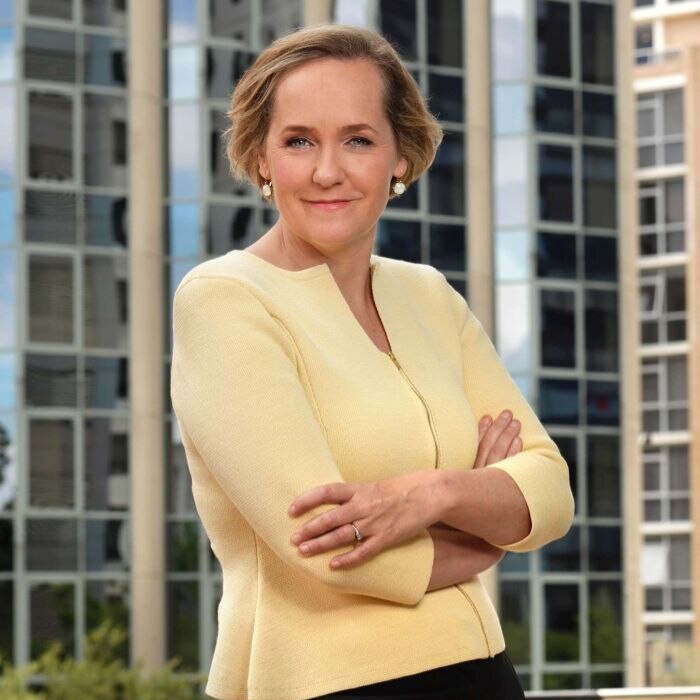
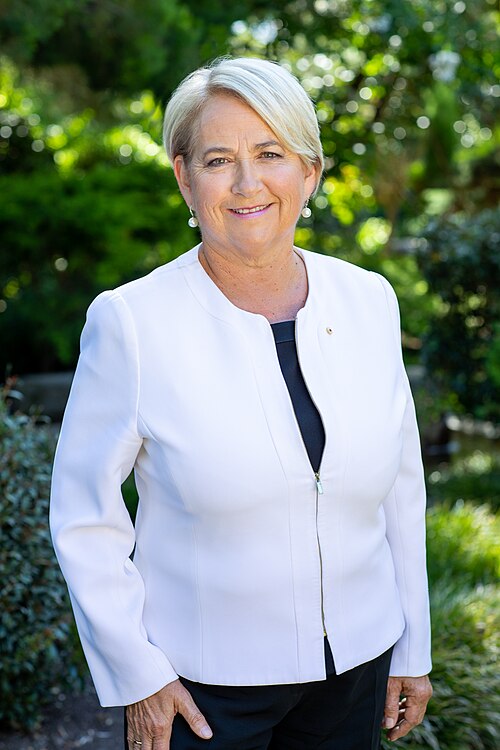
The assessments below are James Macarthur-King’s judgements: what holds up, what remains unproven and what policy should test. Portraits identify speakers; they are not photographs of these events.
The report has opened several overlapping arguments: whether its productivity assumptions are credible, how family support should work, how much migration Australia needs, and whether relief today should come at the expense of retirement savings. These are different policy choices, even when parties cite the same report.
Chalmers presents the report as support for the government’s productivity, housing, tax and superannuation reforms. His argument is that Australia has substantial advantages but must act to manage serious long-term risks.
Chalmers is on solid ground in asking Australians to prepare for ageing, technological change and pressure on public services. The constructive part is treating those pressures as choices governments can influence. The limit is that projections do not prove his reforms will deliver. Productivity gains and budget savings need measurable progress, scrutiny of who benefits, and protection for people affected by reform.
Why this lens: Connects public investment and economic reform with growth, household security and fiscal sustainability.
Evidence check: The release’s stated position is verified. Its broad claims about policy success are not independently proved by the report.
Framing / limits: Presenting projections as a case for the government’s programme is political advocacy; it does not establish that each reform will succeed.
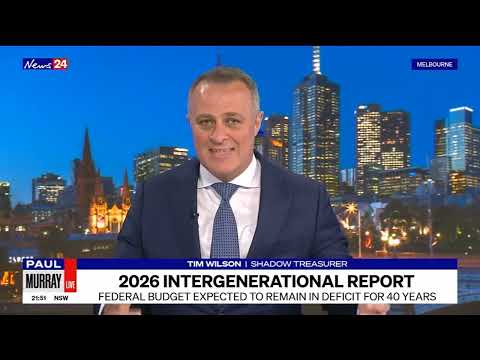
Shadow Treasurer Tim Wilson challenged the report’s productivity assumptions, future tax burden and reliance on NDIS savings. He argued for the Coalition’s proposed Tax Back Guarantee to address bracket creep.
Direct response, 21 September. Wilson’s statement. These are opposition criticisms, not independent verification of every claim in the release.
Lens: Lower tax and spending discipline · market-liberal
James’s assessment & perspective
Wilson’s challenge on productivity and the credibility of spending restraint deserves an answer. His comparison of Treasury’s 1.2% productivity assumption with the RBA’s 0.7% needs qualification: the Governor says the latter covers two years, while the former is a long-run assumption. That does not settle whether Treasury is too optimistic. Australians need credible delivery plans and downside scenarios, rather than a misleading comparison of different horizons.
Why this lens: Prioritises tax relief, budget restraint and doubts about productivity delivery.
Evidence check: The time-horizon comparison was checked against the RBA. Other allegations in the release have not all been verified.
Framing / limits: Personal attacks intensify the argument without proving it. Treasury’s long-run assumption and the RBA’s two-year forecast are not equivalent measures.
Matt Canavan rejected a simple one-off baby bonus, favouring continuing support for families and pointing to income splitting as an approach he had advocated. He said the Coalition was developing a proposal.
Direct response to the fertility debate, 21 September. ABC live coverage, 11:25am entry, before the 12:30pm launch. This was not a response after reading the released report.
Lens: Family tax relief
James’s assessment & perspective
Looking beyond a one-off payment is sensible: raising children is a continuing commitment. But income splitting needs a much clearer design before its fairness can be judged. The test should include single parents, low-income households and both partners’ ability to work, alongside support for unpaid care. Family policy should expand people’s choices, rather than promise a particular birth rate.
Why this lens: Favouring ongoing help and income splitting frames the issue around supporting family effort.
Evidence check: Reported remarks checked; no full matching recording or completed policy was assessed.
Framing / limits: A policy preference is visible; its eventual design and distributional effects remain open.
Source: the linked report of these remarks. No matching statement video was verified in this review.
Its September migration plan proposes three years of net negative migration followed by a net migration cap of 130,000. Separately, Hanson and treasury spokesperson Barnaby Joyce propose letting eligible renters and owner-occupier mortgage holders redirect a quarter of future compulsory super contributions — equivalent to 3% of wages — into take-home pay for up to three years.
Related policies published before the report, on 15 and 7 September respectively; not verified responses to the launch. Migration plan · Super proposal.
Lens: Lower migration and immediate household choice
James’s assessment & perspective
Immediate rent and mortgage pressure deserves attention, and the super proposal would give eligible households access to some income sooner. But it redirects their retirement contributions; it is not an extra employer-funded pay rise. Its value must be tested against forgone retirement saving. Migration policy also needs to weigh housing pressure against the potential effects of a sharp reduction on workers, skills and service capacity.
Why this lens: Prioritises reducing migration and access to income now over compulsory retirement saving.
Evidence check: The proposal’s mechanics are verified against its own release; retirement, housing and economy-wide effects are not established here.
Framing / limits: The pay-boost description stresses money available today. It reallocates future super contributions rather than adding employer-funded pay.
Barbara Pocock argues that housing costs are undermining young Australians’ ability to build wealth. Jordon Steele-John warns that reducing disability funding can shift unmet needs and costs onto families and other services. These August statements provide policy context; they are not verified reactions to this report.
Lens: Public provision, equality and disability rights · economic left
James’s assessment & perspective
These concerns are a useful check on an argument framed mainly around the budget: housing security and access to support shape living standards too. The strongest challenge is to test whether apparent savings simply transfer costs elsewhere. But rejecting cuts does not, by itself, establish a sustainable funding plan. The Greens’ alternatives also need costings, delivery detail and evidence of better outcomes.
Why this lens: Prioritises renter protections, public housing and essential supports over budget savings alone.
Evidence check: The statements are verified; their full housing and employment statistics were not independently audited here.
Framing / limits: This rights-based case foregrounds who bears the costs. Its preferred funding choices still need costings and delivery tests.
Sources: the linked written statements. No matching statement video was verified in this review.
Bob Katter has advocated a $75,000 payment for each birth and family income splitting, arguing that unpaid parenting deserves greater recognition and support.
Related proposal published 11 September, before the report. KAP statement.
Lens: More births and support for unpaid care
James’s assessment & perspective
Katter is right that unpaid care has economic value and families need real choices. A $75,000 birth payment is a major commitment, though, and his release’s estimated cost is not independent verification that it would achieve the intended fertility increase. The proposal needs comparison with continuing family support, housing and childcare, including who benefits and how it would be funded.
Why this lens: Combines substantial government payments with support for families relying on one income.
Evidence check: The release contains its own cost estimates; their accuracy and the proposed fertility effect are not independently established here.
Framing / limits: Demographic alarm strengthens the appeal, but a payment’s estimated cost does not prove it would produce the intended increase in births.
The common test is whether each proposal improves Australians’ lives on terms that can be sustained. Governments should show their assumptions and report results; opponents should meet the same standard when proposing alternatives. Immediate pressures and long-term needs both deserve serious answers.
Coverage note: No direct launch response from Hanson or Joyce was verified in the public sources checked. The same applies to the Greens, Jacqui Lambie Network, United Australia Party and Australia’s Voice. Katter’s proposal predates the report. This review does not establish those parties’ positions on the launch. Independents have individual positions and are not treated as one party.
Photo and logo credits
Portraits identify the speakers and are cropped for display. Each photograph retains its stated licence. Party logos are used for identification; no party endorsement is implied.
Jim Chalmers: Commonwealth of Australia, Department of the Treasury, 2022-11-01. Photo source · CC BY 4.0.
Principal figures and the Treasurer’s stated positions were checked against the published speech and Treasury report on 26 September 2026. Projections and scenarios are conditional; the policy assessments and recommendations are the author’s.
Supplied speech and Q&A transcript. Q&A references use supplied captions; the prepared speech does not include these exchanges. Watch the source event on ANU TV. Relevant supplied-transcript passages: productivity 32:48–36:32; housing 36:50–39:18; tax assumptions 39:32–41:27; fertility 41:39–44:09; care 44:26–46:19. These timestamps refer to the supplied transcript, not the longer YouTube recording.
Which policy change would make the biggest difference to your future — housing, care, tax, skills, migration or retirement? What should government do first, and what trade-off would you accept?
A question, a different view or a useful source can move this conversation forward. You don’t need to be an expert.
Disagreement is welcome. Challenge ideas without threats, harassment, spam or sharing private information.
Comments are readers’ views, not verified facts or Pulse’s position. Display names are not verified. A linked source is not an endorsement.
Comments are public immediately. Pulse can hide or remove them; use Report to flag a concern. Reports are saved for review, but this is not continuously monitored and there is no guaranteed response time.
You can remove your own comments while this browser’s 30-day discussion cookie remains. Its expiry starts when you first open a discussion; clearing it also removes that option. For later removal, contact Pulse with the article and comment details.
Comments remain until removed. We store the displayed text, source link, reply relationship, time and an anonymous ownership code. Reports are private. Temporary abuse-prevention codes stop applying within two hours and are cleared on the next submission; raw network addresses are not stored in the discussion database. The hosting provider may process security data. Privacy details.